
Franco. A. Cerda Dubó Corporate Sustainability Top Voice francocerda3@hotmail.com Transforming aquaculture challenges into market opportunities by merging scientific expertise with commercial acumen. | Innovator in Sustainable Aquaculture | BM, PD, and BU Leader | Director of Marine Ops | PhD & MRES UCAM Universidad Católica San Antonio de Murcia- Riyadh, Saudi Arabia.
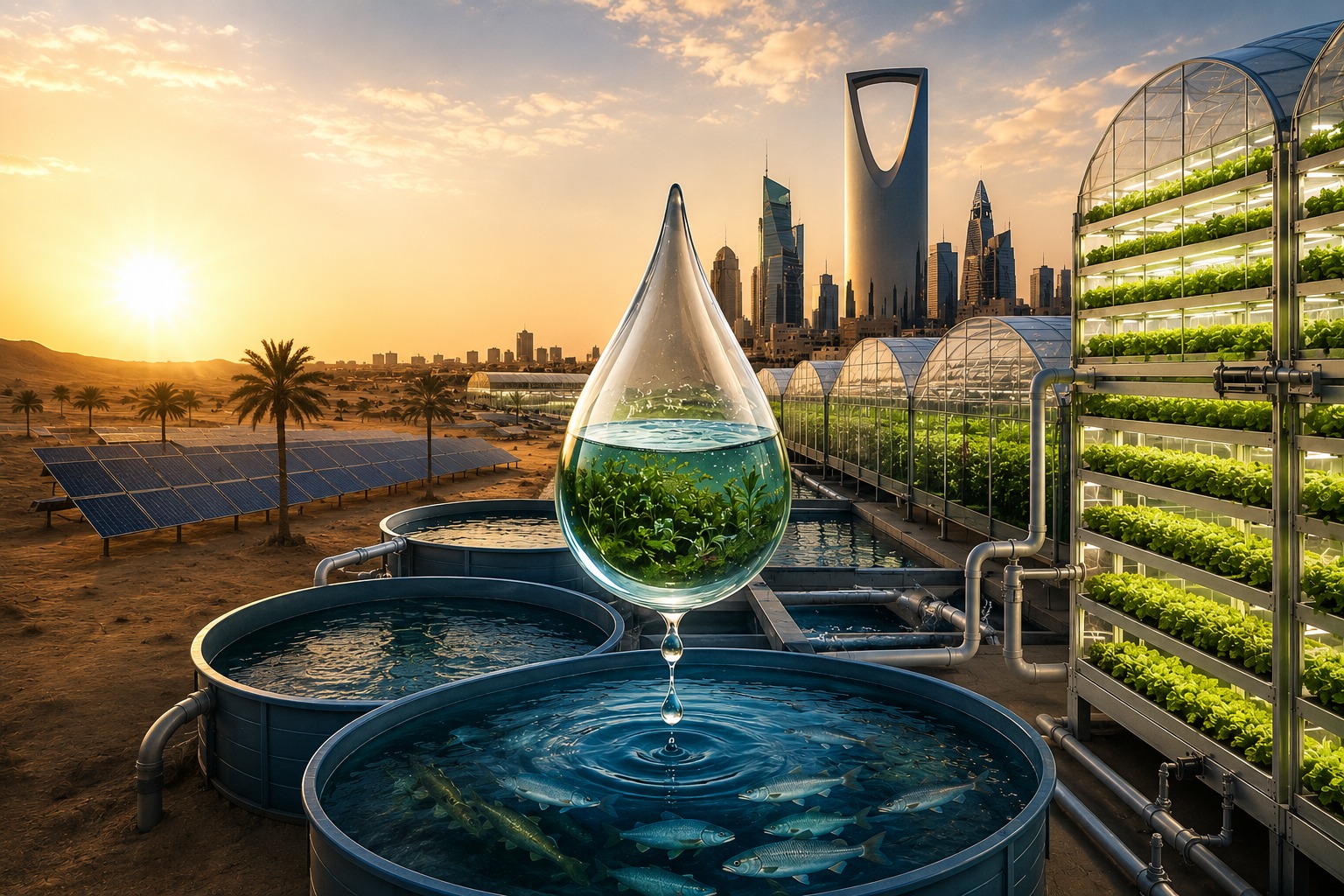
En el corazón de Arabia Saudita, donde las temperaturas de verano pueden superar los 45 °C y la lluvia es un visitante escaso, una pregunta parece desafiar toda lógica:
¿Cómo producir alimentos en medio del desierto?
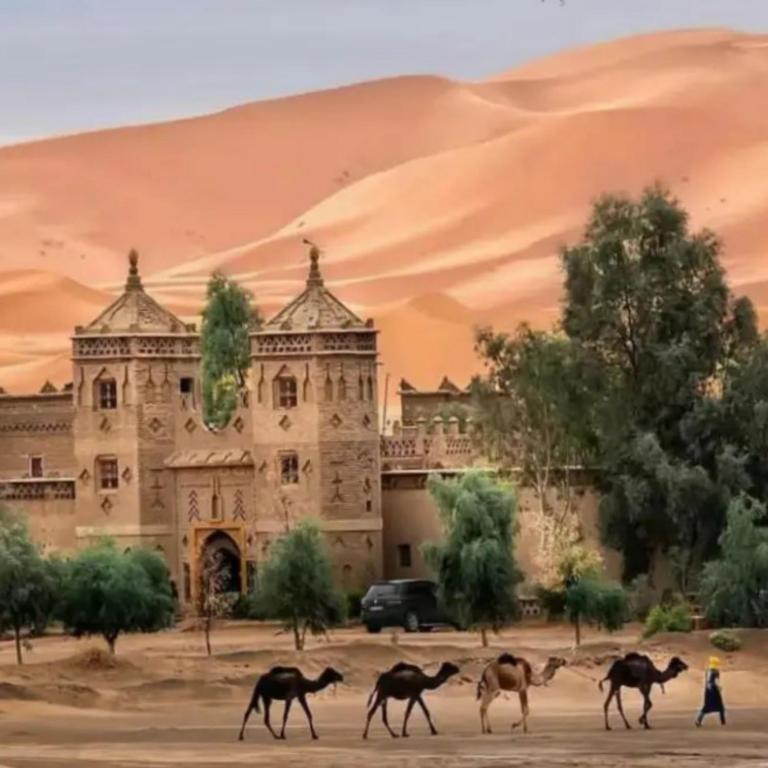
Durante décadas, la respuesta habría parecido imposible. El paisaje árido de Riad —capital del Reino— no evoca grandes campos agrícolas ni abundantes recursos hídricos. Sin embargo, hoy Arabia Saudita está protagonizando una silenciosa revolución que podría cambiar la forma en que entendemos la producción de alimentos en el siglo XXI.
No se trata simplemente de producir más alimentos. El verdadero desafío es mucho más complejo:
producir más usando menos agua.
Y precisamente allí comienza una de las historias más interesantes que hoy se están escribiendo en Medio Oriente.
El agua: el recurso que decide el futuro
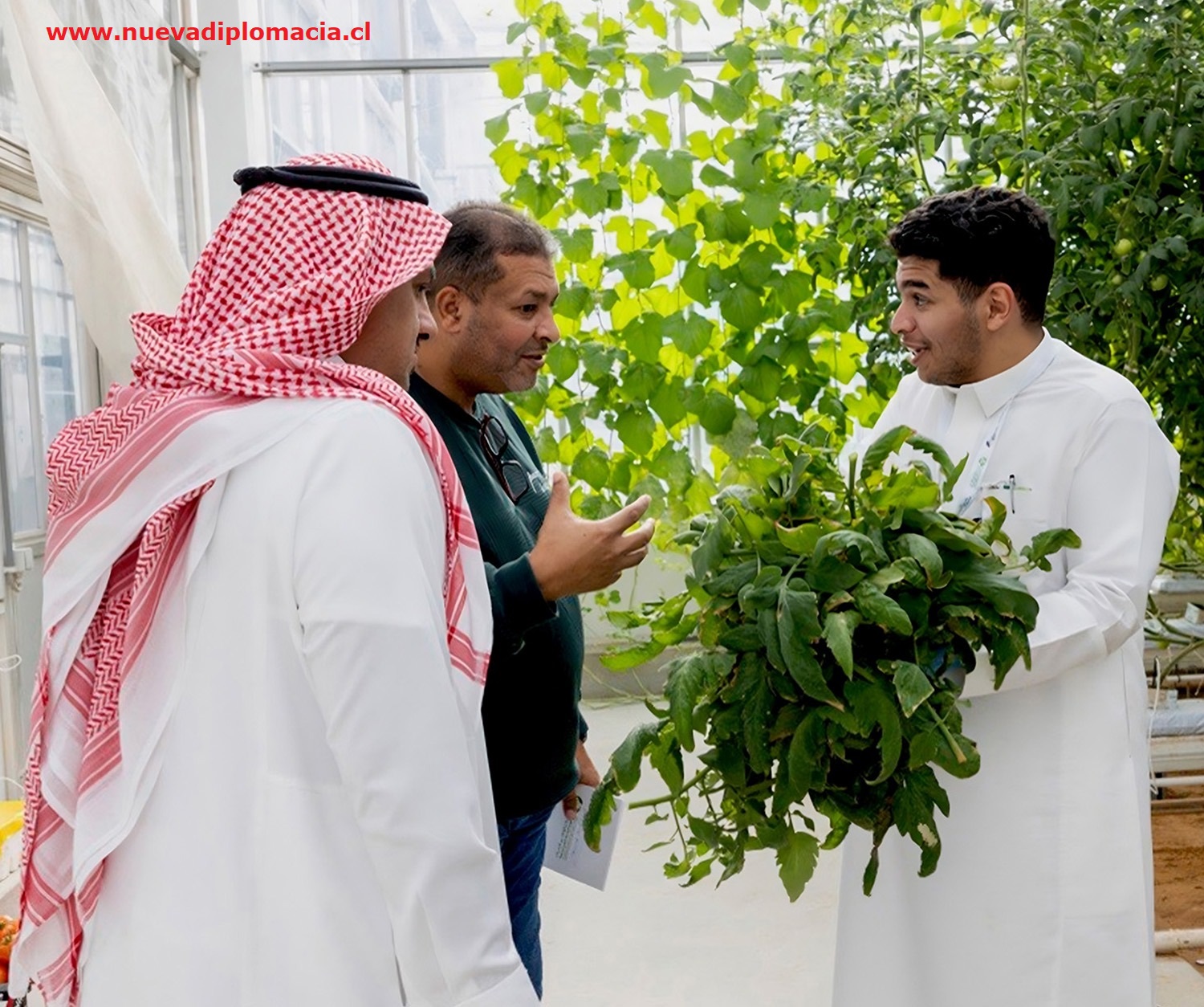
En muchas partes del mundo, el agua se percibe como un recurso disponible. Se abre una llave y aparece. Pero en Arabia Saudita ocurre algo distinto: cada gota tiene un valor estratégico.
La escasez hídrica es probablemente el principal desafío para el desarrollo agrícola de la región. Históricamente, una parte importante del consumo de agua ha estado asociada a la agricultura, obligando al país a replantear sus modelos productivos y avanzar hacia sistemas mucho más eficientes.
Por esa razón, la Visión 2030 saudí ha puesto la seguridad alimentaria y la gestión eficiente del agua entre sus prioridades estratégicas.
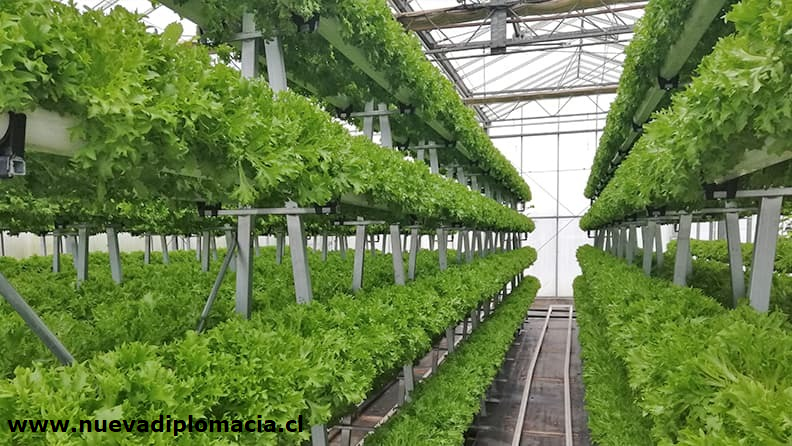
La pregunta ya no es:
“¿Podemos cultivar?”
La nueva pregunta es:
“¿Cómo cultivamos de manera inteligente?”

Agricultura bajo techo: cultivar donde antes parecía imposible
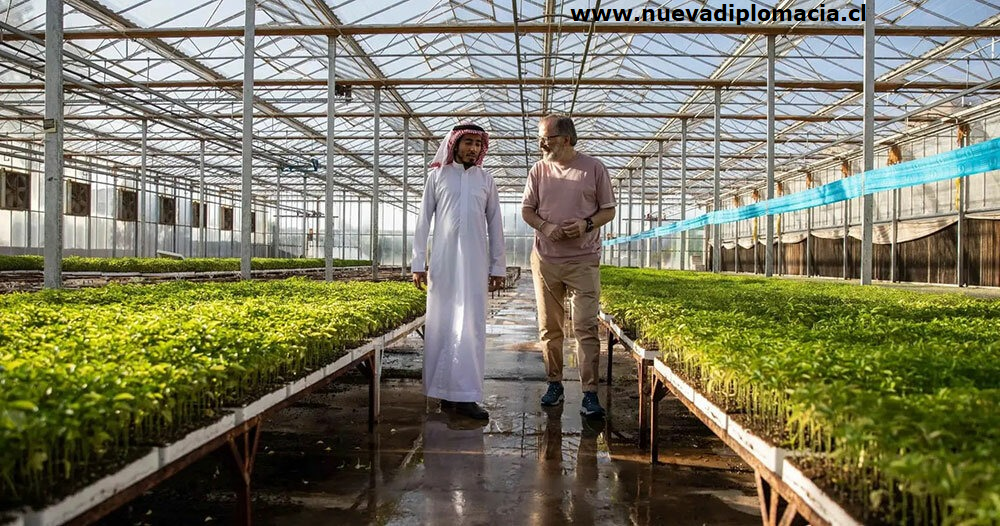
La respuesta ha llegado de la mano de la tecnología.
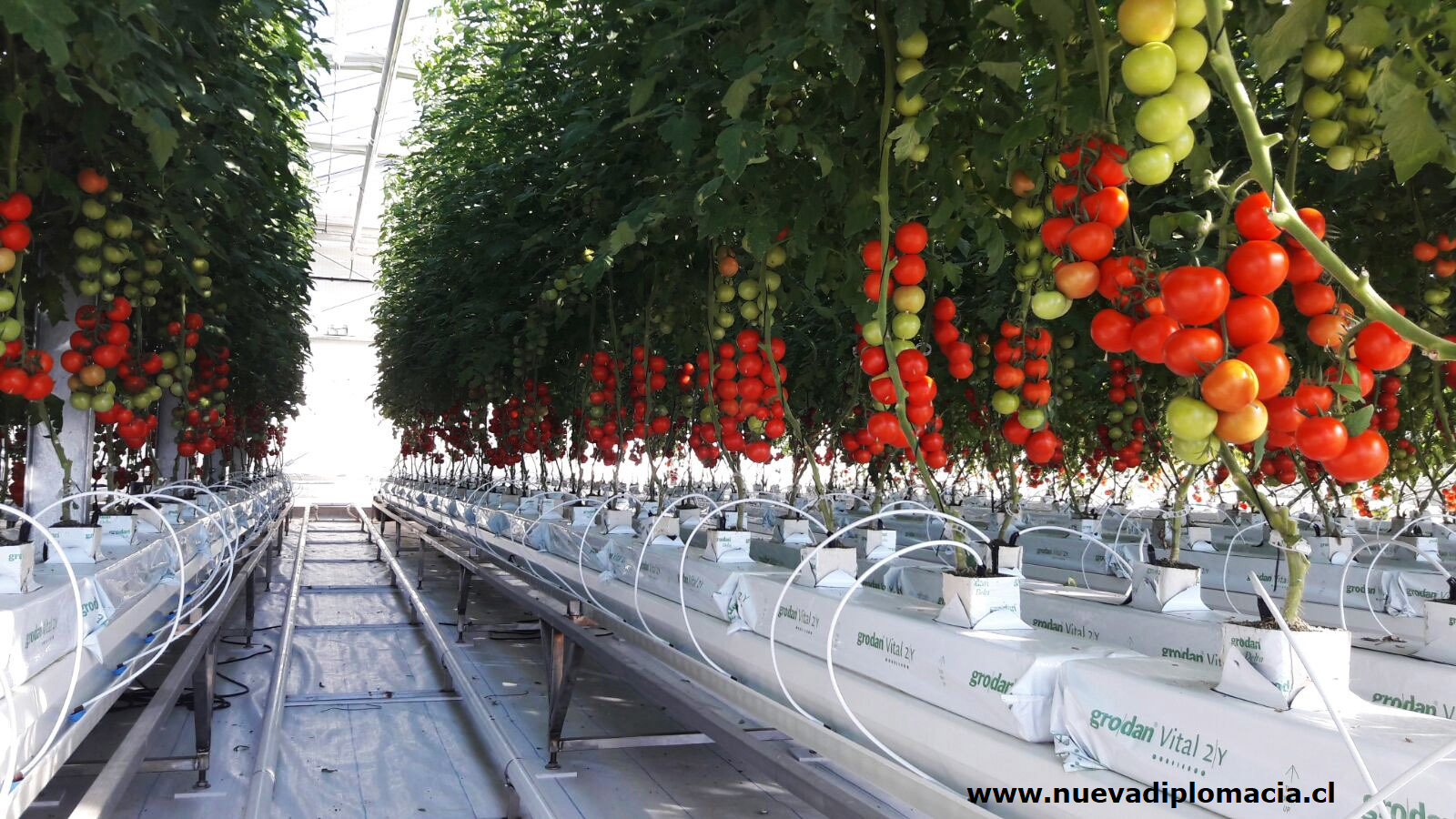
Hoy, en distintos puntos cercanos a Riad, comienzan a multiplicarse sistemas de agricultura en ambientes controlados: invernaderos inteligentes, cultivos hidropónicos y granjas verticales capaces de producir alimentos utilizando una fracción del agua requerida por la agricultura tradicional. Algunos sistemas pueden alcanzar ahorros de agua cercanos al 95%.
La imagen parece salida de una película futurista: sensores, automatización, control climático y plantas creciendo sin suelo.
Pero la tecnología no busca solamente producir tomates o lechugas.
Busca algo mucho más importante:
Seguridad alimentaria.
Porque en un escenario global marcado por conflictos, cambios climáticos y presión sobre los recursos naturales, producir alimentos cerca de donde serán consumidos deja de ser una ventaja y se convierte en una necesidad.
La acuicultura entra en escena
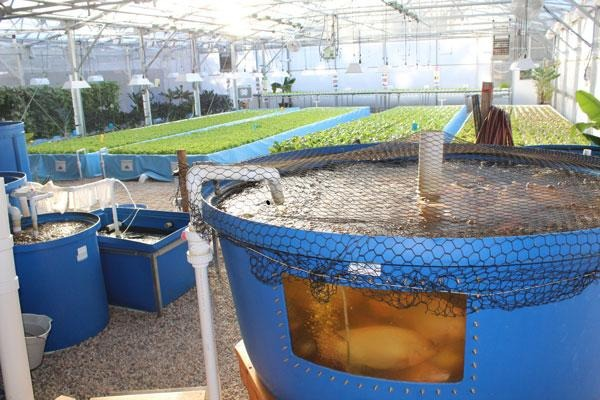
Sin embargo, existe una pieza que muchas veces queda fuera de la conversación: la producción acuícola.
Cuando se habla de acuicultura, muchas personas imaginan grandes jaulas en el mar o estanques tradicionales. Pero la realidad actual es muy diferente.
La acuicultura moderna —especialmente los sistemas de recirculación (RAS) y la acuaponía— permite producir peces utilizando cantidades significativamente menores de agua que métodos convencionales.
Y aquí ocurre algo fascinante:
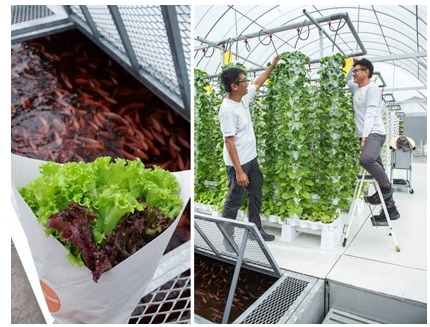
El agua utilizada para criar peces puede transformarse también en fuente de nutrientes para cultivar vegetales.
En otras palabras, el residuo de una producción se convierte en recurso para otra.
Peces y plantas funcionando dentro de un mismo ecosistema.
Lo que hace algunos años parecía un concepto experimental hoy aparece como una herramienta real para regiones con estrés hídrico.
En países áridos como Arabia Saudita, esta integración podría redefinir el concepto tradicional de agricultura.
Ya no hablamos solamente de cultivar en tierra.
Hablamos de producir alimentos mediante ecosistemas inteligentes.
El futuro no pertenece al país con más agua
Existe una idea que durante mucho tiempo pareció obvia: los países con abundantes recursos naturales tendrían ventaja para producir alimentos.
Hoy esa idea comienza a cambiar.
La nueva ventaja competitiva parece estar en otro lugar:
la capacidad de utilizar los recursos de manera más eficiente.
Arabia Saudita está demostrando algo interesante al mundo: incluso en una de las regiones más secas del planeta es posible avanzar hacia sistemas alimentarios más resilientes mediante innovación, tecnología y una nueva forma de pensar la relación entre agua y producción.
Reflexión final
Quizás la gran pregunta del futuro ya no será cuánto petróleo tiene un país.
Quizás la verdadera pregunta será:
¿Cómo produce alimentos sin desperdiciar agua?
Porque en un planeta donde la población sigue creciendo y los recursos naturales son cada vez más limitados, el agua podría transformarse en el activo más valioso de todos.
Y en medio del desierto, Arabia Saudita parece estar intentando escribir la respuesta.
English:
Riyadh and the Challenge of Feeding the Desert: When Water Becomes More Valuable Than Oil
Franco A. Cerda Dubó
Corporate Sustainability Top Voice
Transforming aquaculture challenges into market opportunities by merging scientific expertise with commercial acumen. | Innovator in Sustainable Aquaculture | BM, PD, and BU Leader | Director of Marine Operations | PhD & MRES, UCAM Universidad Católica San Antonio de Murcia – Riyadh, Saudi Arabia
In the heart of Saudi Arabia, where summer temperatures can exceed 45°C and rainfall is a rare visitor, one question seems to challenge all logic:
How can food be produced in the middle of the desert?
For decades, the answer would have seemed impossible. The arid landscape of Riyadh — the Kingdom’s capital — does not evoke images of vast agricultural fields or abundant water resources. Yet today, Saudi Arabia is leading a quiet revolution that could reshape how we understand food production in the twenty-first century.
This is not simply about producing more food.
The real challenge is much more complex:
Producing more while using less water.
And this is where one of the most fascinating stories currently unfolding in the Middle East begins.
Water: The Resource That Will Decide the Future
In many parts of the world, water is perceived as something readily available. You turn on a tap, and it appears.
But in Saudi Arabia, the reality is different: every drop carries strategic value.
Water scarcity is perhaps the most significant challenge facing agricultural development in the region. Historically, a large proportion of water consumption has been associated with agriculture, forcing the country to rethink its production models and move toward far more efficient systems.
For this reason, Saudi Arabia’s Vision 2030 has positioned food security and efficient water management among its strategic priorities.
The question is no longer:
“Can we grow crops?”
The new question has become:
“How can we grow intelligently?”
Indoor Agriculture: Growing Where It Once Seemed Impossible
Technology has become part of the answer.
Across areas surrounding Riyadh, controlled-environment agricultural systems are becoming increasingly common: smart greenhouses, hydroponic cultivation systems, and vertical farms that produce food while using only a fraction of the water required by traditional agriculture. Some systems can achieve water savings of nearly 95%.
The image feels almost futuristic: sensors, automation, climate control, and plants growing without soil.
But technology is not simply about producing tomatoes or lettuce.
It aims to achieve something far more important:
Food security.
Because in a global environment shaped by conflicts, climate change, and increasing pressure on natural resources, producing food closer to where it will be consumed is no longer merely an advantage—it is becoming a necessity.
Aquaculture Enters the Conversation
However, there is one critical piece that often remains absent from these discussions:
Aquaculture.
When people think of aquaculture, many still imagine large ocean cages or conventional ponds.
But modern aquaculture tells a very different story.
Advanced systems such as Recirculating Aquaculture Systems (RAS) and aquaponics enable fish production with significantly lower water volumes than traditional methods.
And this is where something fascinating happens:
The water used to grow fish can also become a source of nutrients for growing vegetables.
In other words, the waste generated by one production process becomes a resource for another.
Fish and plants function within a shared ecosystem.
What once seemed like an experimental concept is now emerging as a practical solution for regions experiencing severe water stress.
In arid countries such as Saudi Arabia, this integration has the potential to redefine the traditional concept of agriculture.
We are no longer talking simply about growing food on land.
We are talking about producing food through intelligent ecosystems.
The Future Does Not Belong to the Country with the Most Water
For many years, one idea appeared obvious:
Countries with abundant natural resources would always have an advantage in food production.
Today, that assumption is beginning to change.
The new competitive advantage may lie elsewhere:
The ability to use resources more efficiently.
Saudi Arabia is demonstrating something important to the world: even in one of the driest regions on Earth, it is possible to move toward more resilient food systems through innovation, technology, and a new way of understanding the relationship between water and production.
Final Reflection
Perhaps the most important question of the future will no longer be:
How much oil does a country possess?
Perhaps the real question will be:
How can a country produce food without wasting water?
Because on a planet where the population continues to grow, and natural resources become increasingly constrained, water may become the most valuable asset of all.
And in the middle of the desert, Saudi Arabia appears to be trying to write the answer.

Arabia Saudita

Fotografías TILAD/RND






SÍGUENOS


ARCHIVOS
- Octubre 2026 (10)
- Septiembre 2026 (19)
- Agosto 2026 (14)
- Julio 2026 (17)
- Junio 2026 (19)
- Mayo 2026 (34)
- Abril 2026 (18)
- Marzo 2026 (22)
- Febrero 2026 (15)
- Enero 2026 (18)
- Diciembre 2025 (20)
- Noviembre 2025 (21)

If you are looking for a reliable place to register and play, this is it. No hidden fees and very transparent. Try 365jiliregister now.
I love how straightforward everything is on this site. No hidden fees or confusing rules, just pure gaming fun. vnr666 is a solid choice.
Really love the interface and the variety of games available. It feels very smooth on mobile. Highly recommend phfh777 to everyone.
[2023]cv999 Login at Download APK | Pinakamabilis na Gcash Casino,Mag-login sa cv999 para sa legit na baccarat online. Alamin din kung paano maglaro ng slots at i-download ang apk para sa mabilis na access. Sali na! visit: cv999
Found this site through a friend and I am glad I did. The customer support is very responsive and the winning streaks are real. Check out bdgv999 if you want a great experience.
This site is a hidden gem. The graphics are crisp and the gameplay is lag-free. I am spending way too much time on pkpak33game lately.
Really solid platform with a great community. The promotions are actually useful and not just clickbait. I am sticking with ciputra88 for a long time.
Best experience I’ve had in a while. Everything from the graphics to the payouts is top notch. Glad I found phjljl5.