
The president’s unpredictable stance toward the U.S.’s biggest rival is complicating crackdown efforts by a crucial House committee.
Tsinghua-Berkeley Shenzhen Institute (TBSI), based in the heart of China’s Silicon Valley, was born a little over a decade ago to “promote a new level of education internationalization,” a University of California, Berkeley, official said at the time.
But some lawmakers see Berkeley’s partnership with Tsinghua University as little more than a nefarious opportunity for China to build its research capacity and develop its military capabilities with the help of American researchers and tax dollars.
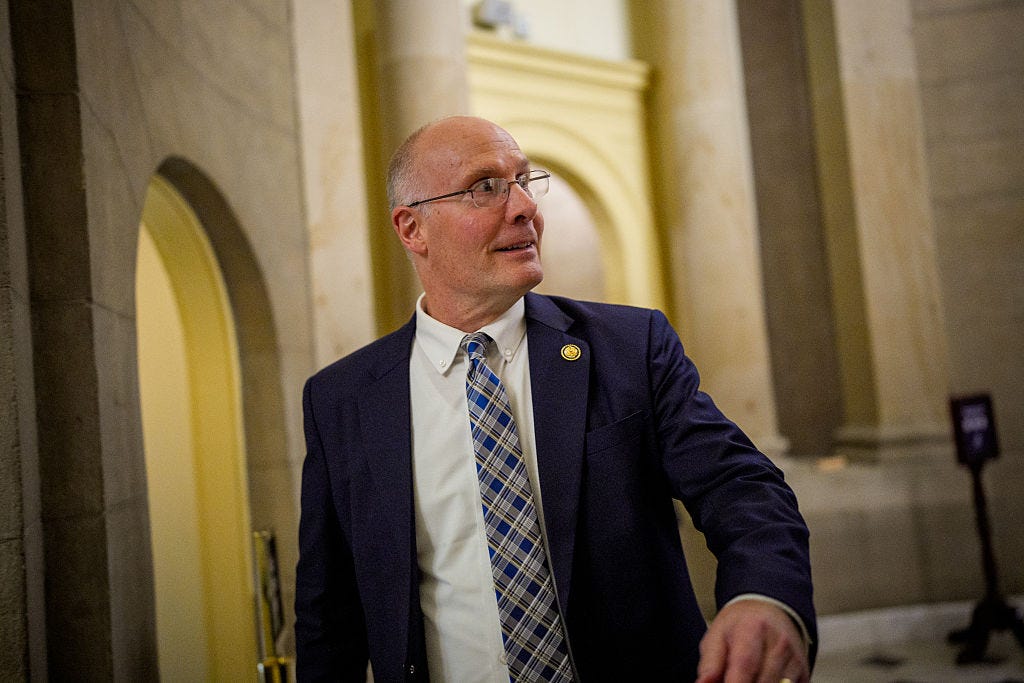
“We’re funding this research, these joint institutes that provided a perfect vehicle for China to steal and access critical American scientific knowledge,” John Moolenaar, the Republican congressman from Michigan who is chairman of the House Select Committee on the Chinese Communist Party (CCP), told me as he leaned back in the leather chair in his Capitol Hill office.
In a series of reports published over the last year, the House committee said that TBSI collaborated on research with Chinese companies sanctioned by the United States, including telecommunications giants Huawei and ZTE, genomics company BGI, and drone maker DJI. TBSI researchers also collaborated on hundreds of papers with researchers at Chinese universities that have ties to the People’s Liberation Army. Some of the research papers have direct military applications, including for “infrared target detection” and an “underwater wireless sensor network.”
Moolenaar, a chemist by trade, told me that he has been around American researchers long enough to know that their mindset is to pursue scientific advances that “can be used for the betterment of mankind.” The CCP doesn’t see the world that way, he argued. “When you have an actor like the Chinese Communist Party who uses this information for nefarious purposes, whether it’s expanding their surveillance state, persecuting people in their own country and around the world, enhancing their defense industrial base that serves as a threat, then that paradigm needs to shift,” he said.
Academia has become a major focus since Moolenaar took over the committee’s leadership last year. It was launched in 2023 to counter national security threats from China. Moolenaar’s pressure resulted in the shutdowns of TBSI and at least a dozen other joint U.S.-China institutions. “Blindly embracing academic cooperation with a geopolitical rival that wants to destroy us is absurd,” said Mike Gallagher, a former Wisconsin congressman who led the committee before Moolenaar and is now Palantir’s head of defense.
Under Gallagher, the House committee’s biggest achievement was last year’s bill that de facto banned the popular social media platform TikTok from American app stores unless it was sold by its Chinese-owned parent company, ByteDance, which has documented ties to the Chinese government.
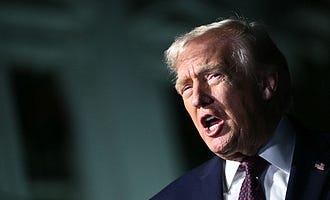
Despite the successes, and wide bipartisan support for countering CCP influence in America, the road ahead seems rocky for China hawks in Congress. The Donald Trump administration’s posture toward China looks increasingly unpredictable and is causing even Republicans to scratch their heads.
“There’s a noticeable shift on China policy from Trump’s first administration to this second one,” said Michael Sobolik, a China expert at the conservative-leaning Hudson Institute. “Last time, the administration bought into full-spectrum, great power competition with the Chinese Communist Party. They were looking for Beijing’s weaknesses and exploiting them, from ideology and economics to soft power and diplomacy. This time, it’s more transactional. It’s a balance-of-power approach.”
“Trump has good instincts,” Sobolik added, “but he’s getting bad advice.”

Despite signing an executive order during his first term declaring TikTok a threat to U.S. national security, Trump changed his tune during the 2024 campaign. He even began lobbying against the House committee’s bill, vowing to “save TikTok.”
Last week, ByteDance officially signed a deal to divest from TikTok. As a part of the deal, which Trump has taken credit for bringing together, ByteDance will maintain control of almost 20 percent of the company, while investors Oracle, Silver Lake and Abu Dhabi-based MGX will take on 50 percent ownership, with each holding 15 percent individually. (Affiliates of existing ByteDance investors will own the remainder.) Skeptics like Matt Pottinger, a former deputy national security adviser to Trump, have argued that the deal’s structure leaves pathways open for Chinese government oversight and control.
Moolenaar said that he believes “the White House is working faithfully to implement” the deal, and blamed the delay on the final approval ByteDance has over any divestiture plan.
Aside from TikTok, Moolenaar is pushing for more restrictions on Chinese universities and companies. The proposed SAFE Research Act, short for the Securing American Funding and Expertise from Adversarial Research Exploitation Act of 2025, would strip federal funding from research collaborations which involve a “hostile foreign entity.”
The Donald Trump administration’s posture toward China looks increasingly unpredictable and is causing even Republicans to scratch their heads.
The bill was inspired by the House committee’s reports during the past year, including “CCP on the Quad,” which said that American taxpayers have inadvertently funded up to 8,800 research projects in collaboration with Chinese universities and researchers. Much of this research, funded through the Department of Defense, focused on topics with direct military applications, the reports found, including nuclear physics, robotics, and artificial intelligence (AI). Another report, “Fox in the Henhouse,” concluded that American taxpayer money helped fund about 1,400 research papers in collaboration with Chinese institutions in just two years. Over half of those research papers included groups with connections to China’s military apparatus.
Moolenaar intended to add the SAFE Act to this year’s National Defense Authorization Act, which passed Congress last week. But two days before the House vote, the measure was pulled after a wave of pushback from groups such as the Asian American Scholar Forum, who said that the bill contained “overly broad and misguided measures . . .that would chill collaboration, unfairly impact researchers, and undermine America’s competitive edge in science and technology.”
Moolenaar successfully lobbied to include some elements of the original bill in the NDAA, including a prohibition on funding Chinese biotechnology companies and restrictions on outbound capital investments toward Chinese companies working on AI and semiconductor research.
“The NDAA only comes around once a year,” he said. “We’re going to be working on that the year ahead, and we’re going to keep pursuing it.”

While research security is important, the point of the spear of U.S. investigations of China should be focused on AI, according to Pottinger.
AI, the technology where the United States arguably maintains the strongest advantage over China, has become the latest China-related flash point in Washington.
In early December, Trump announced that he would approve the sale of Nvidia’s H200 chips, the second-most powerful AI chips the company has ever created, to approved Chinese buyers, reversing a longstanding policy. Many China hawks attribute the shift to the efforts of Jensen Huang, Nvidia’s CEO, who has spent months courting the president and has called being a China hawk a “badge of shame.” Nvidia has also spent nearly $3.5 million lobbying members of Congress and the White House in 2025, according to Senate lobbying disclosures. David Sacks, the White House’s AI czar, has referred to those trying to regulate chip sales as a “doomer cult.”
Proponents of the Nvidia deal argue that it will boost American business interests. They try to counter worries about national security by noting that Nvidia’s most advanced technology, the Blackwell chip, will be reserved solely for American consumers.
“This may be the most consequential foreign policy mistake in a generation,” said Pottinger. “It basically surrenders our most important technological advantage and our best trade leverage, and we’re giving it away for free.”
Moolenaar told Politico in June that AI chips are just as “strategically important” to our national security as nuclear weapon technology was during the Cold War. Whoever wins the AI race “could determine whether American innovation is used to protect freedom or to power authoritarian control,” he said. After Trump’s approval of the Nvidia deal, Moolenaar warned that “China will rip off its technology, mass-produce it themselves, and seek to end Nvidia as a competitor. That is China’s playbook and it is using it in every critical industry.”
When I met with Moolenaar, he expressed hesitation about the deal but wouldn’t condemn it. “I also recognize the president is negotiating a number of priorities in a future meeting with Xi Jinping and has a strategy going into that. We want to do everything we can to be a resource so that wise decisions are made,” Moolenaar said. “Our technological advantage is a huge advantage that we want to make sure we continue to have.”
Last week, Brian Mast, chairman of the House Foreign Affairs committee, introduced the AI Overwatch Act, with Moolenaar as a co-sponsor. The bill would require congressional oversight over AI chip sales to China, Cuba, Iran, North Korea, Russia, and “the Maduro regime of Venezuela,” and would provide “verifiable safeguards” against adversary militaries using American AI chip technology.
Democratic senator Elizabeth Warren of Massachusetts accused Trump of “selling out our national security” and has called on Nvidia’s Huang to testify before Congress. Republican senator Dave McCormick of Pennsylvania said about the deal: “I’m not clear on why that is the right path for us.”
Chris McGuire, a senior fellow on China and emerging technologies at the Council on Foreign Relations, told me that Trump’s approval of the Nvidia deal was a “watershed moment.” “I fear China is going to swindle us into giving them the one thing they actually need,” said McGuire, who was the deputy senior director for technology and national security at the National Security Council under President Joe Biden. “If we can’t agree not to sell supercomputers to China, then what’s the point in protecting anything?”









SÍGUENOS


ARCHIVOS
- Abril 2026 (1)
- Marzo 2026 (22)
- Febrero 2026 (15)
- Enero 2026 (18)
- Diciembre 2025 (20)
- Noviembre 2025 (21)
- Octubre 2025 (20)
- Septiembre 2025 (10)
- Agosto 2025 (24)
- Julio 2025 (19)
- Junio 2025 (17)
- Mayo 2025 (12)
