

Ukrainian servicemen ride atop of an armored vehicle on a road in Donetsk region, eastern Ukraine, Sunday, Aug. 28, 2022. As the war slogs on, a growing flow of Western weapons over the summer is now playing a key role in the counteroffensive, helping Ukraine significantly boost its precision strike capability. (AP Photo/Leo Correa, File)
As the war in Ukraine marked 200 days on Sunday, the country has reclaimed broad swaths of the south and east in a long-anticipated counteroffensive that has dealt a heavy blow to Russia.
The counterattack began in the final days of August and at first focused on the southern region of Kherson, which was swept by Russian forces in the opening days of the invasion. But just as Moscow redirected attention and troops there, Ukraine launched another, highly effective offensive in the northeast, near Kharkiv.
Facing the prospect of a large group of its forces becoming surrounded, Moscow pulled back its troops from Kharkiv in a dramatic shift in the state of play that posed the biggest challenge to the Kremlin since it launched the invasion Feb. 24.
“The Ukrainian army has taken advantage of the relocation of the bulk of the Russian forces to the south and is trying to direct the course of the war, excelling in maneuver and showing great ingenuity,” said Mykola Sunhurovskyi, a military expert with the Razumkov Centre, a Kyiv-based think tank. Ukraine’s quick gains, he added, are “important both for seizing initiative and raising troops’ spirit.”
Ukrainian President Volodymyr Zelenskyy praised the military in a video address Saturday night, saying it has reclaimed about 2,000 square kilometers (over 770 square miles) of territory so far this month. He also taunted Moscow over its withdrawal, saying the Russian army was “demonstrating the best it can do — showing its back” and “they made a good choice to run.”
The Russian military debacle has provoked outrage among Russian military bloggers and patriotic commentators, who chastised the Kremlin for failing to mobilize more forces and take stronger action against Ukraine. Even Ramzan Kadyrov, the Moscow-backed leader of the Russian region of Chechnya, publicly criticized the Russian Defense Ministry for what he called “mistakes” that made the Ukrainian blitz possible.
Both sides have suffered heavy losses in Europe’s largest conflict since World War II. Ukraine’s military chief said last month that nearly 9,000 of its soldiers have been killed in action. And while Moscow hasn’t reported its own losses since March, Western estimates put the toll as high as 25,000 dead, with the wounded, captured and deserters bringing the overall Russian losses to more than 80,000.
Ukraine has sought to mobilize the population to reach an active military of 1 million people, while Russia, in contrast, has continued to rely on a limited contingent of volunteers for fear that a mass mobilization could fuel discontent and upset internal stability.
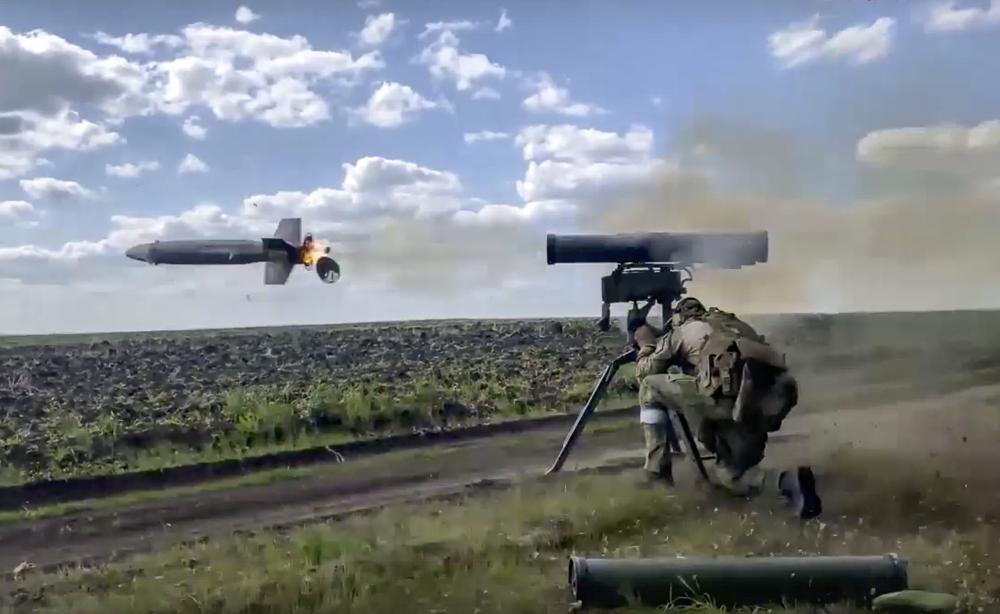
As the war slogs on, a growing flow of Western weapons over the summer is playing a key role in the counteroffensive, helping Ukraine significantly boost its precision strike capability.
Since the counteroffensive began, Ukraine said, its forces have reclaimed more than 30 settlements in the Kharkiv region.
In the Kherson region, troops sought to drive Russian forces from their foothold on the west bank of the Dnieper River, a potential vantage point for a push deeper into Ukraine by Moscow.
The Ukrainian General Staff said Russian forces had also left several settlements in the region but did not identify the towns.
The city of Kherson, an economic hub at the confluence of the Dnieper and the Black Sea with a prewar population of about 300,000, was the first major population center to fall in the war.
Russian forces also have made inroads into the Zaporizhzhia region farther north, where they seized Europe’s largest nuclear power plant. The last of its six reactors was shut down Sunday after operating in a risky “island mode” for several days to generate electricity for the plant’s crucial cooling systems after one of the power lines was restored.
Moscow has installed puppet administrations in occupied areas, introduced its currency, handed out Russian passports and prepared for local plebiscites to pave the way for annexation. But the counteroffensive has derailed those plans, with a top Moscow-backed official in Kherson saying the vote there needs to be put off.
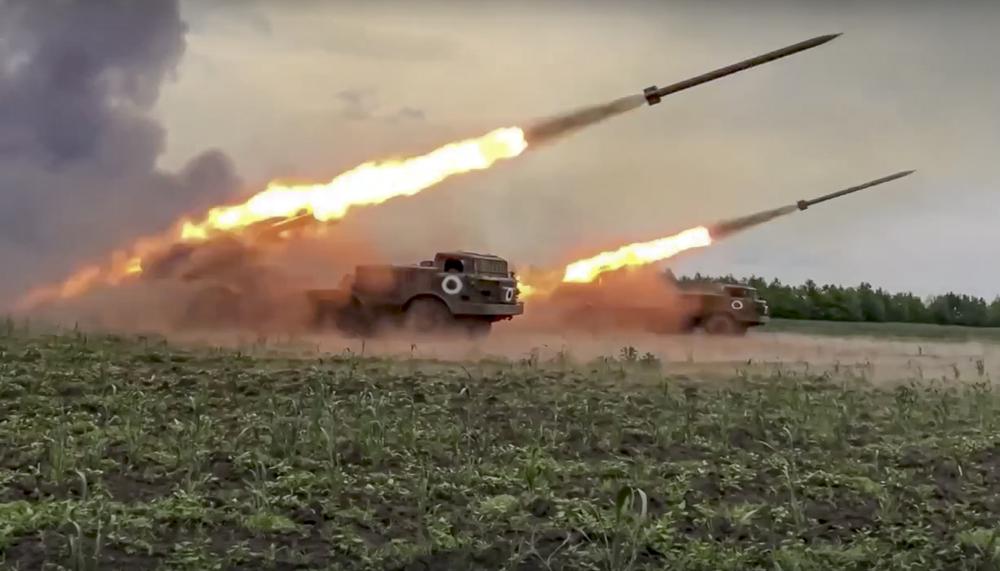
The counterattack followed methodical strikes on Russian infrastructure and supply lines. Ukrainian forces have used U.S.-supplied HIMARS multiple rocket launchers to pound the two bridges on the Dnieper, forcing Russian troops in the Kherson region to rely on pontoon crossings that also have faced daily strikes.
Last month, a series of explosions also hit airbases and a munitions depot in Crimea, underlining the vulnerability of the peninsula that was annexed by Russia in 2014 and has been crucial for its southern operations. Ukrainian authorities initially refrained from claiming responsibility, but the country’s military chief, Gen. Valerii Zaluzhnyy, acknowledged in recent days that his forces hit them with rockets.
Ukrainian military analyst Oleh Zhdanov said Kyiv “has used the tactics of methodically exhausting the Russian army, weakening it and depriving it of a possibility to regularly beef up its forces.”
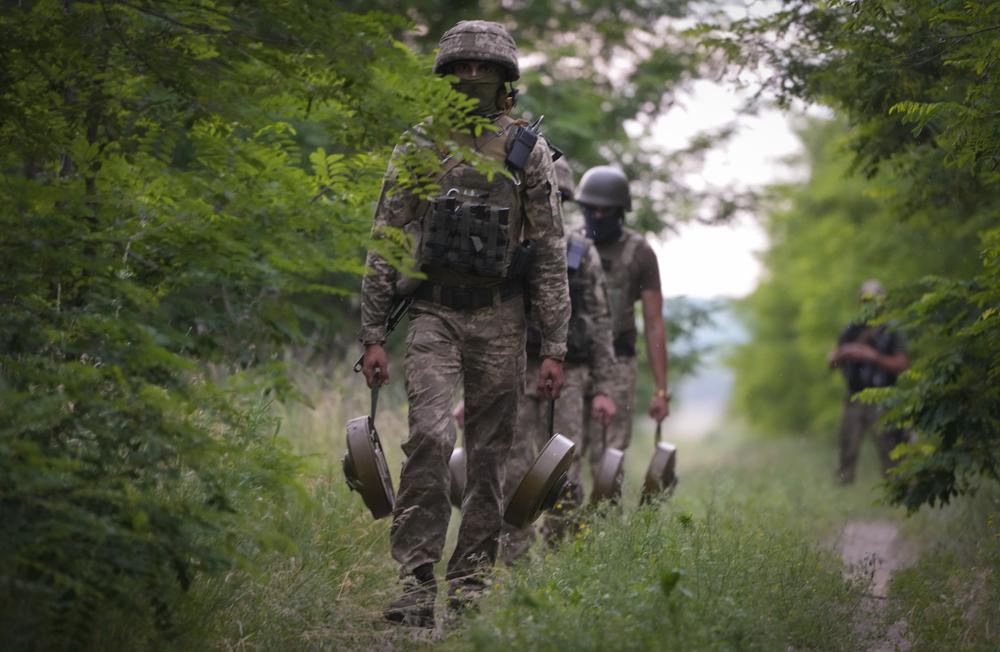
Unlike in the south, where Ukraine’s counteroffensive proceeded more slowly on the barren steppes of Kherson that left troops vulnerable to Russian artillery, the Kharkiv region’s forests offered natural cover that allowed for lightning-fast surprise attacks from multiple directions.
“Swiftness and surprise have become key components of the Ukrainian army action in the Kharkiv region after Russian forces deployed there had been relocated to the south,” Zhdanov said.
Michael Kofman, an expert on the Russian military at the Virginia-based think tank CNA, said the counteroffensive “has proven a very significant victory for Ukraine.”
“Russian forces appear to have been spread thinly, and military leadership unprepared despite earlier evidence of Ukrainian buildup,” Kofman wrote. “I think it’s fair to assess that Russia was caught by surprise with little in the way of reserves locally available.”
After capturing the town of Balakliia, about 55 kilometers (about 34 miles) southeast of Kharkiv, Ukrainian forces quickly pressed their offensive farther east to Kupiansk, a rail hub vital for sustaining Russian operations in the region.
They claimed control of the strategic city Saturday, cutting supply lines to a big group of Russian forces around Izyum to the south. To prevent their complete encirclement, Moscow ordered the hasty retreat, claiming they were relocating to focus on the neighboring Donetsk region.
Zhdanov noted that a successful counteroffensive is key to persuading allies to further increase supplies of weapons to Ukraine, something that was discussed Thursday at a NATO meeting in Germany.
“The events in the south and in the Kharkiv region must show to the West that the Ukrainian military knows how to handle the weapons and needs to develop their success,” Zhdanov said.
ESPAÑOL:
Ucrania impulsa una gran contraofensiva mientras la guerra marca 200 días.
Militares ucranianos viajan encima de un vehículo blindado en una carretera en la región de Donetsk, al este de Ucrania, el domingo 28 de agosto de 2022. A medida que avanza la guerra, un creciente flujo de armas occidentales durante el verano ahora está desempeñando un papel clave en la contraofensiva, ayudando a Ucrania a aumentar significativamente su capacidad de ataque de precisión. (AP Foto/Leo Correa, Archivo)
A medida que la guerra en Ucrania marcaba 200 días el domingo, el país ha recuperado amplias franjas del sur y el este en una contraofensiva largamente esperada que ha asestado un duro golpe a Rusia.
El contraataque comenzó en los últimos días de agosto y al principio se centró en la región sur de Jersón, que fue barrida por las fuerzas rusas en los primeros días de la invasión. Pero justo cuando Moscú redirigió la atención y las tropas allí, Ucrania lanzó otra ofensiva altamente efectiva en el noreste, cerca de Járkov.
Ante la perspectiva de que un gran grupo de sus fuerzas sea rodeado, Moscú retiró sus tropas de Járkov en un cambio dramático en el estado de la cuestión que planteó el mayor desafío para el Kremlin desde que lanzó la invasión el 24 de febrero.
“El ejército ucraniano ha aprovechado la reubicación de la mayor parte de las fuerzas rusas al sur y está tratando de dirigir el curso de la guerra, sobresaliendo en maniobras y mostrando un gran ingenio”, dijo Mykola Sunhurovskyi, experto militar del Centro Razumkov, un grupo de expertos con sede en Kiev. Las rápidas ganancias de Ucrania, agregó, son “importantes tanto para tomar la iniciativa como para elevar el espíritu de las tropas”.
El presidente ucraniano, Volodymyr Zelenskyy, elogió al ejército en un discurso en video el sábado por la noche, diciendo que ha recuperado unos 2.000 kilómetros cuadrados (más de 770 millas cuadradas) de territorio en lo que va del mes. También se burló de Moscú por su retirada, diciendo que el ejército ruso estaba “demostrando lo mejor que puede hacer, mostrando su espalda” y que “tomaron una buena decisión para correr”.
La debacle militar rusa ha provocado indignación entre los blogueros militares rusos y los comentaristas patrióticos, que reprendieron al Kremlin por no movilizar más fuerzas y tomar medidas más fuertes contra Ucrania. Incluso Ramzan Kadyrov, el líder de la región rusa de Chechenia respaldado por Moscú, criticó públicamente al Ministerio de Defensa ruso por lo que llamó “errores” que hicieron posible el bombardeo ucraniano.
Ambas partes han sufrido grandes pérdidas en el mayor conflicto de Europa desde la Segunda Guerra Mundial. El jefe militar de Ucrania dijo el mes pasado que casi 9.000 de sus soldados han muerto en acción. Y aunque Moscú no ha reportado sus propias pérdidas desde marzo, las estimaciones occidentales sitúan el número de muertos en 25.000 muertos, con los heridos, capturados y desertores llevando las pérdidas rusas totales a más de 80.000.
Ucrania ha tratado de movilizar a la población para llegar a un ejército activo de 1 millón de personas, mientras que Rusia, por el contrario, ha seguido dependiendo de un contingente limitado de voluntarios por temor a que una movilización masiva pueda alimentar el descontento y alterar la estabilidad interna.
A medida que avanza la guerra, un creciente flujo de armas occidentales durante el verano está desempeñando un papel clave en la contraofensiva, ayudando a Ucrania a aumentar significativamente su capacidad de ataque de precisión.
Desde que comenzó la contraofensiva, dijo Ucrania, sus fuerzas han recuperado más de 30 asentamientos en la región de Járkov.
En la región de Kherson, las tropas trataron de expulsar a las fuerzas rusas de su punto de apoyo en la orilla oeste del río Dniéper, un punto de vista potencial para un empuje más profundo en Ucrania por parte de Moscú.
El Estado Mayor ucraniano dijo que las fuerzas rusas también habían abandonado varios asentamientos en la región, pero no identificaron las ciudades.
La ciudad de Kherson, un centro económico en la confluencia del Dniéper y el Mar Negro con una población de antes de la guerra de unos 300.000 habitantes, fue el primer centro de población importante en caer en la guerra.
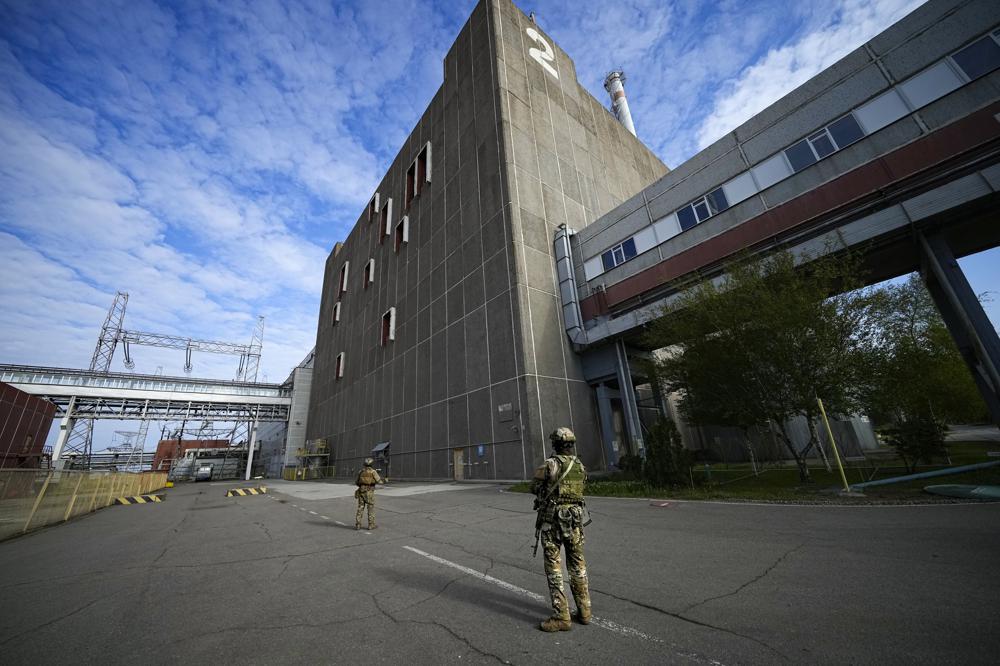
Las fuerzas rusas también han hecho incursiones en la región de Zaporizhzhia más al norte, donde se apoderaron de la planta de energía nuclear más grande de Europa. El último de sus seis reactores fue cerrado el domingo después de operar en un arriesgado “modo isla” durante varios días para generar electricidad para los sistemas de enfriamiento cruciales de la planta después de que se restableció una de las líneas eléctricas.
Moscú ha instalado administraciones títeres en áreas ocupadas, ha introducido su moneda, ha entregado pasaportes rusos y se ha preparado para plebiscitos locales para allanar el camino para la anexión. Pero la contraofensiva ha descarrilado esos planes, con un alto funcionario respaldado por Moscú en Kherson diciendo que la votación allí debe posponerse.
The counterattack followed methodical strikes on Russian infrastructure and supply lines. Ukrainian forces have used U.S.-supplied HIMARS multiple rocket launchers to pound the two bridges on the Dnieper, forcing Russian troops in the Kherson region to rely on pontoon crossings that also have faced daily strikes.
Last month, a series of explosions also hit airbases and a munitions depot in Crimea, underlining the vulnerability of the peninsula that was annexed by Russia in 2014 and has been crucial for its southern operations. Ukrainian authorities initially refrained from claiming responsibility, but the country’s military chief, Gen. Valerii Zaluzhnyy, acknowledged in recent days that his forces hit them with rockets.
Ukrainian military analyst Oleh Zhdanov said Kyiv “has used the tactics of methodically exhausting the Russian army, weakening it and depriving it of a possibility to regularly beef up its forces.”
Unlike in the south, where Ukraine’s counteroffensive proceeded more slowly on the barren steppes of Kherson that left troops vulnerable to Russian artillery, the Kharkiv region’s forests offered natural cover that allowed for lightning-fast surprise attacks from multiple directions.
“Swiftness and surprise have become key components of the Ukrainian army action in the Kharkiv region after Russian forces deployed there had been relocated to the south,” Zhdanov said.
Michael Kofman, an expert on the Russian military at the Virginia-based think tank CNA, said the counteroffensive “has proven a very significant victory for Ukraine.”
“Las fuerzas rusas parecen haberse dispersado escasamente, y el liderazgo militar no está preparado a pesar de la evidencia anterior de la acumulación de Ucrania”, escribió Kofman. “Creo que es justo evaluar que Rusia fue sorprendida con pocas reservas disponibles localmente”.
Después de capturar la ciudad de Balakliia, a unos 55 kilómetros (unas 34 millas) al sureste de Járkov, las fuerzas ucranianas presionaron rápidamente su ofensiva más al este hacia Kupiansk, un centro ferroviario vital para mantener las operaciones rusas en la región.
Reclamaron el control de la ciudad estratégica el sábado, cortando las líneas de suministro a un gran grupo de fuerzas rusas alrededor de Izyum al sur. Para evitar su cerco completo, Moscú ordenó la retirada apresurada, alegando que se estaban reubicando para centrarse en la vecina región de Donetsk.
Zhdanov señaló que una contraofensiva exitosa es clave para persuadir a los aliados de aumentar aún más los suministros de armas a Ucrania, algo que se discutió el jueves en una reunión de la OTAN en Alemania.
“Los eventos en el sur y en la región de Járkov deben mostrar a Occidente que el ejército ucraniano sabe cómo manejar las armas y necesita desarrollar su éxito”, dijo Zhdanov.









SÍGUENOS


ARCHIVOS
- Marzo 2026 (22)
- Febrero 2026 (15)
- Enero 2026 (18)
- Diciembre 2025 (20)
- Noviembre 2025 (21)
- Octubre 2025 (20)
- Septiembre 2025 (10)
- Agosto 2025 (24)
- Julio 2025 (19)
- Junio 2025 (17)
- Mayo 2025 (12)
- Abril 2025 (11)
